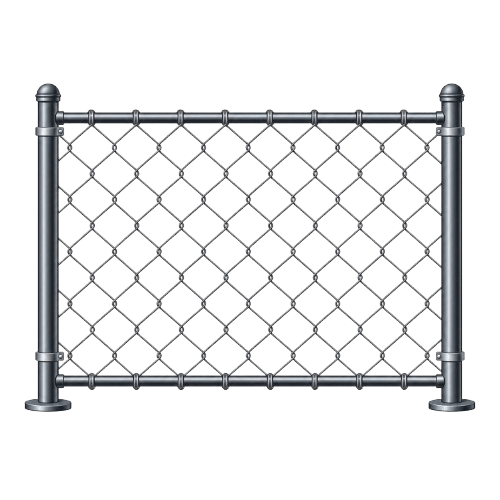
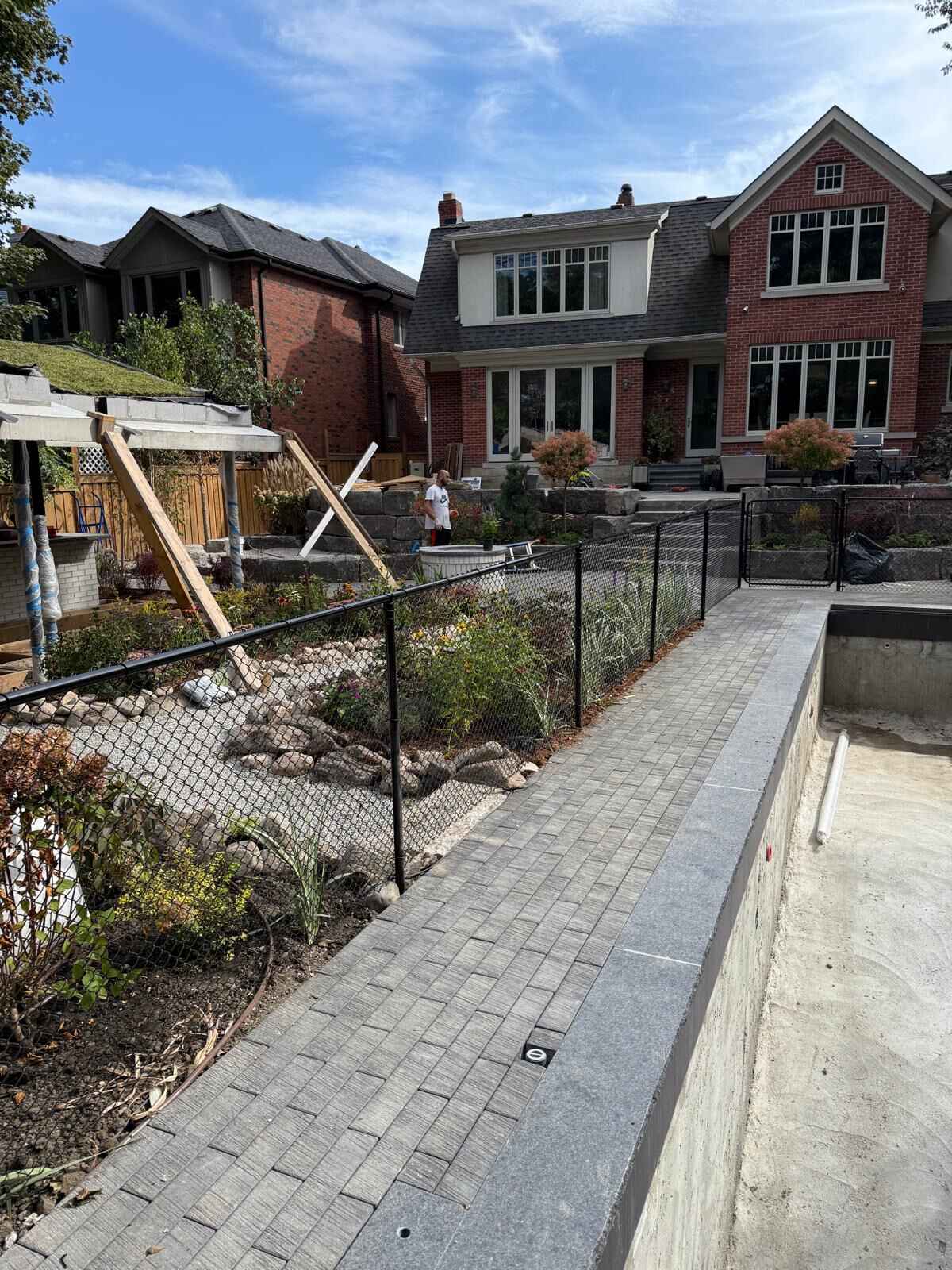

Residential Chain Link Fence
$527.71 – $2,169.60Price range: $527.71 through $2,169.60
Residential chain link fence packages designed for backyards, side yards, dog areas, property lines, rental properties, and general home fencing. This system provides a durable, clean-looking fence option for homeowners who want reliable containment, visibility, and long-term value. Available for delivery across Canada, with installation available in Ontario. Pricing shown is for general supply packages. For a full project estimate, including gates, layout details, delivery, or installation, please contact us.
Please contact us to confirm availability, delivery cost, final pricing, gates, custom layouts, or installation. Use our Residential Chain Link Fence Calculator to estimate materials required for your project.
Residential Chain Link Fence for Canadian Homes
Residential chain link fence is one of the most practical fencing options for Canadian homeowners who need a durable boundary, pet containment, yard separation, or a cost-effective way to secure a property line. It is not chosen because it is the most decorative fence on the market. It is chosen because it works, lasts, and can cover longer fence runs without the same cost pressure as many wood, vinyl, ornamental, or full privacy fence systems.
For backyards, side yards, dog areas, rental properties, rural lots, cottage properties, laneways, and general residential perimeters, chain link fencing gives homeowners a clean and dependable system that still keeps the yard open. The mesh design allows visibility, airflow, and light to pass through while still creating a clear physical barrier.
Chain Link Fence Canada supplies residential chain link fence packages for delivery across Canada, with installation available in Ontario. Whether you are planning a small side-yard enclosure or a longer backyard fence run, the goal is to match the fence height, finish, gates, posts, and layout to the way the property will actually be used.
What Makes Residential Chain Link Fence Different?
A residential chain link fence is usually designed for home use rather than heavy commercial or industrial security. That means the system is intended for common residential applications such as backyards, side entrances, pet areas, gardens, property lines, and light-duty containment. It still needs to be strong, but it does not always require the heavier pipe sizes, taller heights, barbed wire, or security upgrades that may be used on commercial sites.
If the property needs heavier pipe, taller fence heights, stronger gates, or a more security-focused layout, a residential system may not be the right fit. In those cases, our commercial and industrial chain link fence options may be better suited for businesses, yards, compounds, storage areas, schools, and higher-traffic properties.
The biggest advantage of residential chain link is that it gives homeowners a complete fence system without adding unnecessary material cost. For many properties, the fence does not need to block the view or act as a privacy wall. It simply needs to define the yard, contain pets, control access, and hold up outdoors.
Residential chain link fence is also easier to plan around uneven spaces than many rigid panel systems. It can work along side yards, rear property lines, open lots, and longer runs where a more decorative fence style may become too expensive or visually heavy.
Typical Residential Chain Link Fence Spec:
- Black 1-1/4" top rail
- 1-7/8" line posts
- 2" x 9 gauge chain link mesh
Use this calculator to estimate basic residential chain link fence materials in feet, including approximate mesh, top rail, line posts, terminal posts, and gate posts. This is a planning estimate only. Final quantities may vary based on layout, corners, slopes, gates, installation conditions, and delivery requirements.
Your Estimated Material Checklist
- Fence length 100 ft
- Fence height 6 ft
- Finish Black
- Approx. chain link mesh 100 linear ft
- Approx. top rail required 100 linear ft
- Estimated line posts 9
- Estimated terminal posts 4
- Gate openings 1 gate
- Project type Supply only
- Delivery area Ontario
Common Uses for Residential Chain Link Fencing
Chain link fencing is used on residential properties for many different reasons. Some homeowners need a simple fence along a property line. Others need a secure backyard for children, pets, or rental tenants. In rural and cottage areas, chain link is often used because the fence run is longer and the priority is function, not decoration.
- Backyard fence enclosures
- Side-yard fencing and access control
- Dog runs and pet containment areas
- Rental property fencing
- Garden and landscape protection
- Laneway and driveway borders
- Rural residential lots
- Cottage and recreational properties
- General property line fencing
- Pool-area perimeter fencing where permitted by local code
The right chain link fence layout depends on the reason for the fence. A dog run may need different gate placement than a property line fence. A side-yard fence may need a walk gate. A larger backyard may need multiple runs, corners, and terminal posts. For homeowners planning a supplied or installed project in Ontario, our chain link fence Ontario page explains how we handle local supply, installation, and project quoting. This is why measurements and layout details matter before final pricing is confirmed.
Black Chain Link Fence vs. Galvanized Chain Link Fence for Homes
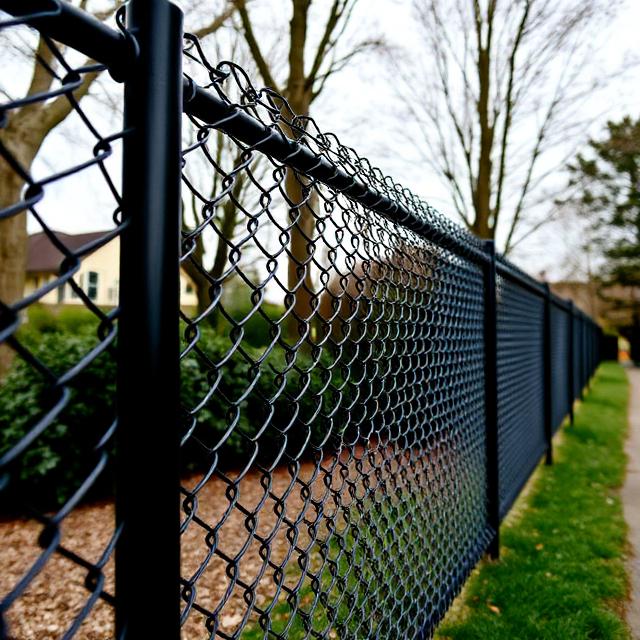
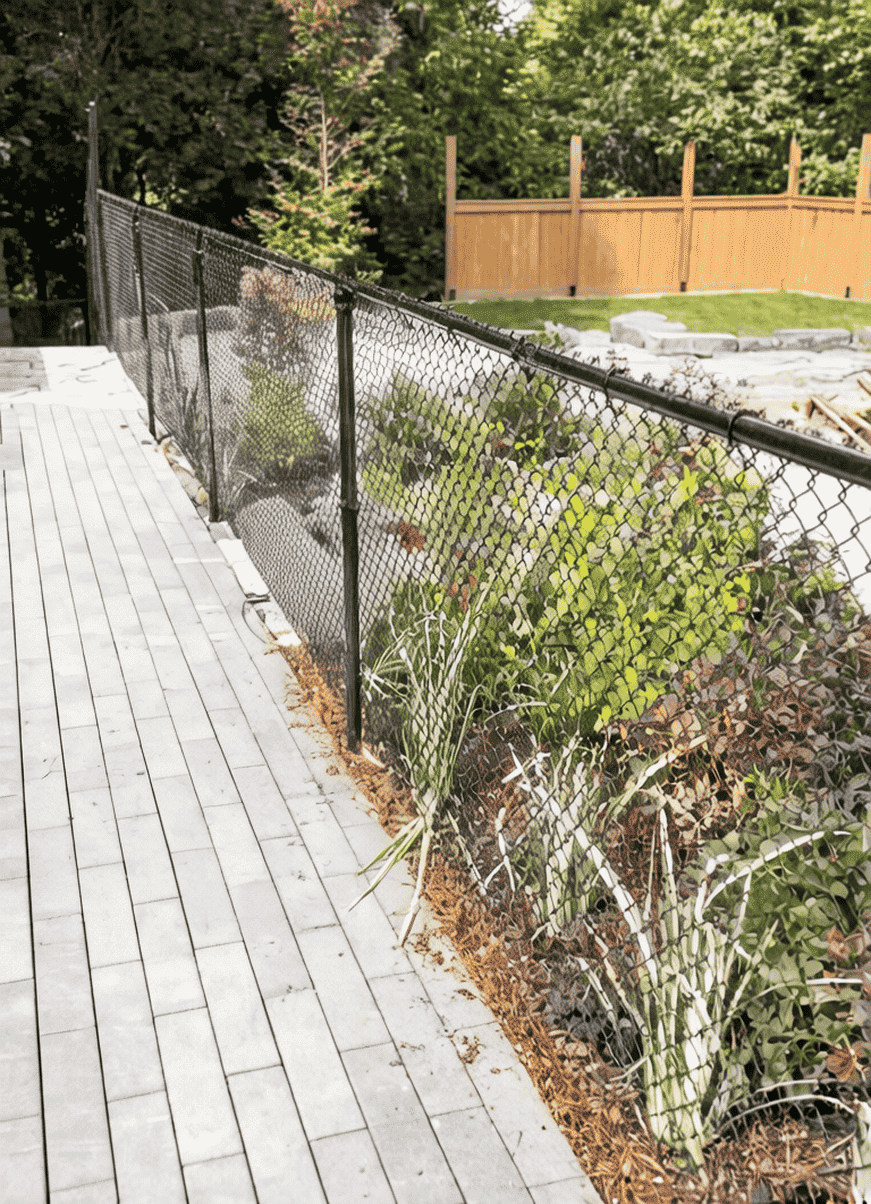
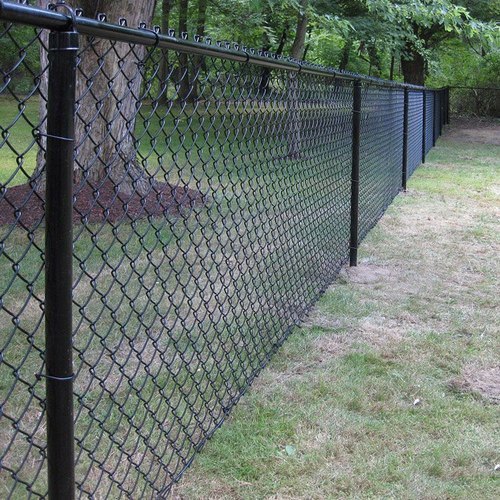
Residential chain link fencing is commonly supplied in black or galvanized finishes. Both can be practical, but they create a different look on the property. Black chain link fence is often preferred around homes because it has a cleaner and less industrial appearance. The black finish tends to blend into landscaping, grass, trees, gardens, and darker exterior details. From a distance, black chain link can feel less visually distracting than bright galvanized steel, especially in a backyard or along a garden edge.
Galvanized chain link fence is the traditional silver-grey option. It is commonly used when the customer wants a simple, functional fence and is less concerned about matching the fence to the home or landscaping. Galvanized chain link can still be a strong choice for side yards, rural properties, rental properties, utility areas, and long property lines where appearance is not the main concern.
For most homeowners who care about curb appeal or backyard appearance, black chain link is usually the better-looking option. For customers who want straightforward function at a practical price, galvanized chain link can still make sense. For larger properties where function, security, and heavier-duty materials matter more than appearance, our commercial and industrial chain link fence options may be a better fit.
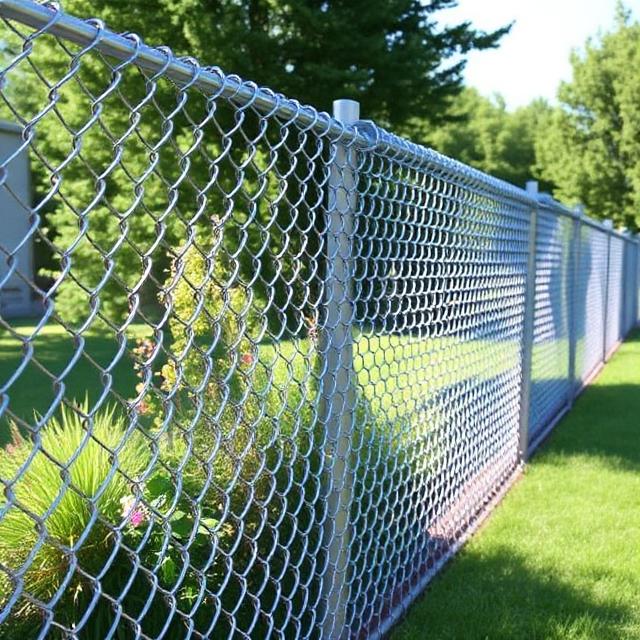
Galvanized chain link fence panels installed between neighbouring residential properties.
Choosing the Right Residential Chain Link Fence Height
Fence height is one of the most important choices in a residential chain link project. The right height depends on the property, the purpose of the fence, local rules, and how much containment or separation is needed.
A shorter fence may be enough for basic yard separation or a garden area. A taller fence is usually better for dogs, side yards, backyards, and areas where the homeowner wants a stronger boundary. In many residential projects, 4′ and 5′ chain link fences are used for general property boundaries, while 6′ chain link fences are often selected for larger dogs, more secure backyards, and side-yard access control.
Before ordering, homeowners should check local by-laws, pool enclosure requirements, subdivision rules, and any property-specific restrictions. Fence rules can vary by municipality, especially for front yards, corner lots, pool areas, and properties near sidewalks or roads. For Ontario projects, our chain link fence Ontario page covers important local installation and by-law considerations, while our chain link fence panels page explains how height, mesh, posts, gates, and finish options can affect the final system.
Residential Chain Link Fence for Dogs and Pets
Chain link fence is one of the most common fence types for dogs because it provides reliable containment while keeping the yard open and visible. Dogs can see through the fence, air moves through it, and the yard does not feel as closed in as it might with a solid privacy fence.
For smaller dogs, a lower fence may be enough depending on the yard and the dog’s behaviour. For larger dogs, active dogs, or dogs that jump, a taller fence is usually the safer choice. Gate hardware and gate placement are also important. A fence can be strong, but if the gate is poorly placed or undersized, the yard may still be inconvenient to use.
If the fence is mainly for pets, think about more than just the total footage. Consider where the dog will enter the yard, whether a gate is needed from the driveway, whether there are gaps under existing structures, and whether the ground slopes. These details can affect both the material list and the final installation.
What to Consider Before Requesting a Quote
A residential chain link fence quote is more accurate when the layout is clear. Total footage is important, but it is not the only thing that affects the price. Corners, gates, end points, slopes, access, delivery location, and installation conditions can all change the final material list.
For a basic supply quote, it helps to know the total fence length, desired height, finish, and delivery location. For an installation quote, photos and a simple sketch are also helpful. Even a rough drawing showing the house, property lines, gate locations, and fence runs can prevent mistakes.
- Total fence length or approximate footage
- Desired fence height
- Black or galvanized finish
- Number and size of gates
- Number of corners and separate fence runs
- City and province for delivery or installation
- Photos of the area if installation is needed
- Any slopes, retaining walls, concrete, trees, or access issues
If the layout includes gate openings, extra fittings, terminal posts, or hardware, it may help to review our chain link fence parts before requesting a quote. For customers outside the GTA or Ontario, our chain link fence service areas page also explains where we deliver materials and provide installation service.
Gates, End Posts, Corner Posts, and Layout Details
Many residential fence projects need more than mesh, line posts, and top rail. Gates, end posts, corner posts, and additional hardware are often required depending on the layout. A simple straight run will require different materials than a yard with several corners, multiple openings, and separate fence sections.
A walk gate may be needed for backyard access. A wider gate may be needed for lawn equipment, trailers, garbage bins, or maintenance access. If the fence connects to a house, garage, existing fence, or retaining wall, the end conditions should be reviewed before the material list is finalized.
This is why pricing shown on a product page should be treated as general reference pricing. The final quote can change once gates, corners, delivery, and installation details are confirmed.
Residential Chain Link Fence Cost Factors
Residential chain link fence cost depends on several factors. The biggest ones are fence height, total footage, material finish, number of gates, number of corners, delivery location, and whether the project is supply-only or installed.
A long straight fence run is usually easier and more cost-effective to quote than a shorter project with multiple turns, gates, tight access, slopes, or custom sections. Installation conditions also matter. Digging through soft soil is very different from working around roots, rock, concrete, old posts, landscaping, or limited side-yard access.
Chain link is often chosen because it provides strong value over longer distances. It does not provide full privacy, but it does provide containment, visibility, and a clear property boundary at a lower cost than many privacy-style fence systems.
Delivery Across Canada
Residential chain link fence materials are available for delivery across Canada. This is useful for homeowners, contractors, builders, rural property owners, and property managers who need fencing supplied to their province or job site. You can also view our chain link fence service areas page for more information about delivery and service coverage.
Delivery costs can vary based on location, order size, material length, total weight, and unloading access. A small residential order going to a city address may be handled differently than a larger order going to a rural property, commercial yard, farm, cottage area, or remote job site.
Before final pricing is confirmed, it is important to provide the delivery city, province, postal code, and any access details that may affect unloading. This helps avoid surprises and allows the quote to reflect the actual shipping requirements.
Installation Available in Ontario
Chain Link Fence Canada provides residential chain link fence installation in Ontario. Installation quotes are based on the fence length, height, number of gates, number of corners, site access, soil conditions, and overall project layout.
For installation projects, photos and measurements are strongly recommended. A clear layout helps confirm where the fence starts and ends, where gates are needed, whether the fence connects to existing structures, and whether any site conditions could affect the work.
Ontario homeowners should also check local fence by-laws before installation, especially for front yards, corner lots, pool enclosures, and properties with special neighbourhood or subdivision rules. Fence rules are usually set by the local municipality, not by one province-wide fence code. To find the correct city or town website, homeowners can start with the Government of Ontario list of municipalities, then search that municipality’s website for fence by-laws, pool enclosure rules, zoning requirements, and permit information.
Residential Chain Link Fence Compared to Other Fence Types
Chain link fencing is not the right choice for every home. If the goal is full privacy, a solid wood, vinyl, composite, or privacy screen system may be more suitable. If the goal is a decorative front-yard look, ornamental aluminum may be a better visual fit.
But when the goal is practical containment, a clear property boundary, pet security, and reasonable cost over a longer run, chain link often makes more sense than heavier or more decorative systems. It is especially useful when the homeowner does not want to block light, airflow, or visibility.
For many homes, chain link is the fence that solves the real problem without adding unnecessary cost. That is why it remains common for backyards, side yards, rental properties, rural homes, and dog areas across Canada.
Residential Chain Link Fence vs. Commercial Chain Link Fence
Residential and commercial chain link fence systems are similar in appearance, but they are not always used the same way. Residential chain link is usually chosen for homes, backyards, side yards, pets, gardens, and property lines. Commercial chain link is more common for businesses, compounds, equipment yards, schools, municipal properties, and higher-traffic locations.
Commercial or industrial chain link fencing may involve heavier posts, taller heights, stronger gates, security upgrades, or different specifications depending on the site. If your project involves equipment storage, public access, commercial traffic, or higher security needs, a commercial chain link fence system may be a better fit.
For most home projects, residential chain link fence is the more practical option because it gives homeowners the strength and containment they need without paying for commercial-grade requirements that may not be necessary. If you are comparing options for a home, business, or mixed-use property, contact Chain Link Fence Canada with your fence length, height, location, gate needs, and project details so we can help point you toward the right system.
Why Order Residential Chain Link Fence From Chain Link Fence Canada?
Chain Link Fence Canada focuses on chain link fencing systems, components, and project support for customers across Canada. Instead of treating chain link as an add-on product, the site is built around helping customers choose the right chain link fence materials for residential, commercial, and industrial applications.
For residential customers, that means support with fence height, material finish, footage, gates, delivery, and installation options. For contractors and property managers, it means access to chain link fence materials that can be supplied for projects in different parts of the country.
If you are unsure what to order, contact us with your measurements, photos, city, province, and a short description of the project. We can help determine whether a standard residential chain link fence package is suitable or whether a custom quote is required.
Residential Chain Link Fence FAQs
Is chain link fence good for residential properties?
Yes. Chain link fence is a practical residential fence option for backyards, side yards, dog areas, rental properties, rural lots, and property lines. It provides containment and security while keeping the yard open and visible.
Do you deliver residential chain link fence across Canada?
Yes. Residential chain link fence materials are available for delivery across Canada. Delivery pricing depends on the destination, order size, material length, and unloading requirements.
Do you install residential chain link fence in Ontario?
Yes. Installation is available in Ontario. For installation pricing, send the fence length, height, gate requirements, location, photos, and layout details.
Is black chain link fence better than galvanized for homes?
Black chain link fence is often preferred for residential properties because it has a cleaner appearance and blends better with landscaping. Galvanized chain link is a practical choice when function and cost are the main priorities.
What height should I choose for a backyard chain link fence?
The best height depends on the use. A 4′ or 5′ fence may work for general boundaries, while 6′ is often preferred for larger dogs, side yards, and stronger containment. Always check local rules before ordering.
Can chain link fence be used for dogs?
Yes. Chain link fence is commonly used for dog containment. Larger or more active dogs may require taller fencing, secure gate hardware, and careful planning around low spots or gaps.
Are gates included with residential chain link fence packages?
Gates may need to be quoted separately depending on the opening size, height, finish, and layout. Contact us before ordering if your fence requires one or more gates.
What information do you need for a quote?
For the most accurate quote, provide the total fence length, height, finish, number of gates, city, province, and any photos or layout details. For installation, photos and a sketch are especially helpful.
Is chain link fence lower maintenance than wood fence?
Yes. Chain link fence generally requires less maintenance than wood fencing because it does not need staining, painting, or regular board replacement. It is a practical option for homeowners who want a durable fence with minimal upkeep.
Can residential chain link fence be used around a pool?
Chain link fence may be allowed for pool areas in some municipalities, but pool enclosure rules vary by location. Always confirm local pool fencing requirements before ordering or installing a fence.